Sound Stories: Field Recording in Theory and Practice
(Most recent course, taught Fall 2023, Cornell University)
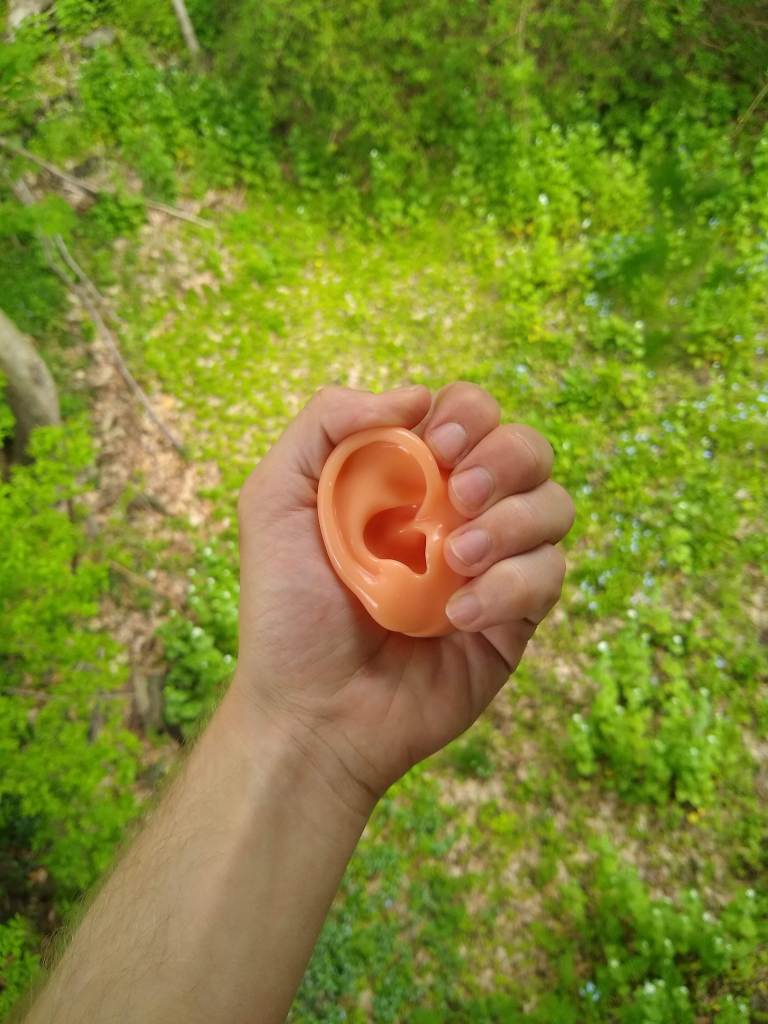
Sound Stories: Field Recording in Theory and Practice explores the art of telling stories with recorded sound. During the semester, you will learn to apply a diverse range of recording and studio production techniques to foster your own personal creative storytelling practice. You will also explore an expansive, cross-disciplinary survey of artistic, philosophical, sociological, and scientific approaches to field recording in theory and practice. Workshops, field trips, listening exercises, and collaborative narrative design experiments will culminate in the development of three original sonic artworks and an accompanying sound journal. Students from any discipline are welcome, and no musical training is required.
Selected Texts from Syllabus
Andean, J. 2016. “Narrative Modes in Acousmatic Music” in Organised Sound 21(3): 192-203
Attali, Jacques. 2004 [1985]. “Noise and Politics” in Audio Culture. Edited by Christoph Cox & Daniel Warner. New York & London: Bloomsbury
Barthes, Roland. 2012 [1986]. “The Grain of the Voice” In The Sound Studies Reader. Edited by Jonathan Sterne. New York: Routledge.
Berger, John. 1972. Ways of Seeing. London: British Broadcasting Corporation & Penguin Books Ltd.
Berlant, Lauren & Kathleen Stuart (2019) “Swells,” “Dilations,” “This is Vanilla,” “Writing, Life” & “As If” The Hundreds. Duke University Press.
Bruyninckx, Joeri. 2018. “Conclusion” in Listening in the Field: Recording and the Science of Birdsong. Cambridge, MA: MIT Press.
Carson, Anne. 1986. “Preface” Eros the Bittersweet: An Essay. Princeton University Press.
Chavez, María & Warren, Kristina. 2022. “A Sound Artist’s Breakdown of Field Recording over History” In Organised Sound 27(1): 41–43
Chion, Michel. 2012 [1993]. “The Three Listening Modes” In The Sound Studies Reader. Edited by Jonathan Sterne.New York: Routledge.
Chua, Daniel K. L., and Alexander Rehding. 2021. Alien Listening: Voyager’s Golden Record and Music From Earth. New York: Zone Books
Clarke, Eric F. 2005. “Perception, Ecology, and Music.” Ways of Listening: An Ecological Approach to the Perception of Musical Meaning. Oxford University Press.
Crawford, Kate. 2009. Following You: Disciplines of Listening in Social Media. Continuum: Journal of Media and Cultural Studies 23(4): 525–35
England, Sara Nicole. 2019. “Lines, Waves, Contours: (Re)mapping and Recording Space in Indigenous Sound Art.” Public Art Dialogue 9 (1): 8–30.
Eno, Brian. 2004 [1983]. “The Studio as Compositional Tool” in Audio Culture. Edited by Christoph Cox & Daniel Warner. New York & London: Bloomsbury
Hoy, Ronald R. 1992. “Evolution of Hearing in Insects as an Adaptation to Predation from Bats” The Evolutionary Biology of Hearing. Edited by D. B Webster et al. New York: Spinger-Verlag
Hoy, Ronald R. et al. 2022. “Outsourced hearing in an orb-weaving spider that uses its web as an auditory sensor” PNAS 119(14)
Huron, David. 2006. “A Sense of Future” In Sweet Anticipation: Music and the Psychology of Expectation. Cambridge, MA: MIT Press
Ingold, Tim. 2011. “Four Objections to the Concept of Soundscape.” In Being Alive: Essays on Knowledge, Movement, and Description. London & New York: Routledge.
Krueger, Joel W. 2011. “Doing things with Music.” Phenomenology and the Cognitive Sciences 10: 1-22.
Le Guin, Ursula K. 2019 [1986]. “The Carrier Bag Theory of Fiction.” In The Carrier Bag Theory of Fiction. London, England: Ignota Books
Lennox, Peter. 2017. “Music as artificial environment: Spatial, embodied multimodal experience” Body, Sound and Space in Music and Beyond: Multimodal Explorations. Edited by Clemens Wöllner. New York & London: Routledge.
López, Francisco. 2001. “Profound Listening and Environmental Sound Matter.” In Audio Culture. Edited by Christoph Cox & Daniel Warner. New York & London: Bloomsbury
Martin, Allie. 2019. “Hearing Change in the Chocolate City: Soundwalking as Black Feminist Method.” Sounding Out (Online Blog). Link
Miller, Paul D. 2017 [1996]. “Erasures and the Art of Memory” Audio Culture. 2nd Edition. Edited by Christoph Cox & Daniel Warner. New York & London: Bloomsbury
Moten, Fred. 2015. “hand up to your ear” The Little Edges Middletown, Connecticut: Wesleyan University Press
Oliveros, Pauline. 1972. “Sonic Images” Software for People: Collected Writings 1963-80
Oliveros, Pauline. 2010 [2000]. “Quantum Listening: From Practice to Theory (to Practice Practice)” In Sounding the Margins: Collected Writings 1992-2009. Kingston, NY: Deep Listening Publications. (Originally in MusicWorks 76)
Ono, Yoko. 1964. “Music” Grapefruit: A Book of Instructions and Drawings. New York: Simon & Schuster
Ouzounian, Gascia. 2021. “Mapping the Acoustic City: Noise Mapping and Sound Mapping” In Stereophonica: Sound and Space in Science, Technology, and the Arts. Cambridge, MA: MIT Press
Pisaro-Liu, Michael. 2010. “Ten framing considerations of the field” [Unpublished]
Radigue, Eliane. 2009. “The Mysterious Power of the Infinitesimal.” In Leonard Music Journal 19: pp. 47-49. Translated by Anne Fernandez and Jacqueline Rose. Cambridge, MA: MIT Press
Saunders, James. 2012. “Commentary: Ear Piece.” Word Events: Perspectives on Verbal Notation. Lely, John & Saunders James (eds). Bloomsbury: pp. 289-294
Schaeffer, Pierre. 2012 [1952]. “Chapter 1” In Search of a Concrete Music. Translated by Christine North & John Dack. Berkeley: University of California Press
Schafer, R. Murray. 1973. “The Music of the Environment” in Audio Culture. Edited by Christoph Cox & Daniel Warner. New York & London: Bloomsbury
Steege, Benjamin. 2015. “Acoustics” In Keywords in Sound. Edited by David Novak & Matt Sakakeeny. Durham: Duke University Press.
Sterne, Jonathan. 2003. “Hello!” In The Audible Past: Cultural Origins of Sound Reproduction. Durham & London: Duke University Press.
Vonnegut, 1999, “8 Basic Rules of Writing” Bagombo Snuff Box: Uncollected Short Fiction. New York: Random House.
Weidman, Amanda. 2015. “Voice.” In Keywords in Sound. Edited by David Novak & Matt Sakakeeny. Durham: Duke University Press.
Westerkamp, Hildegard. 2002. “Linking soundscape composition and acoustic ecology” Organized Sound 7(1): 51-56 Cambridge, UK: Cambridge University Press
Other Syllabi:
Music Theory for Producers
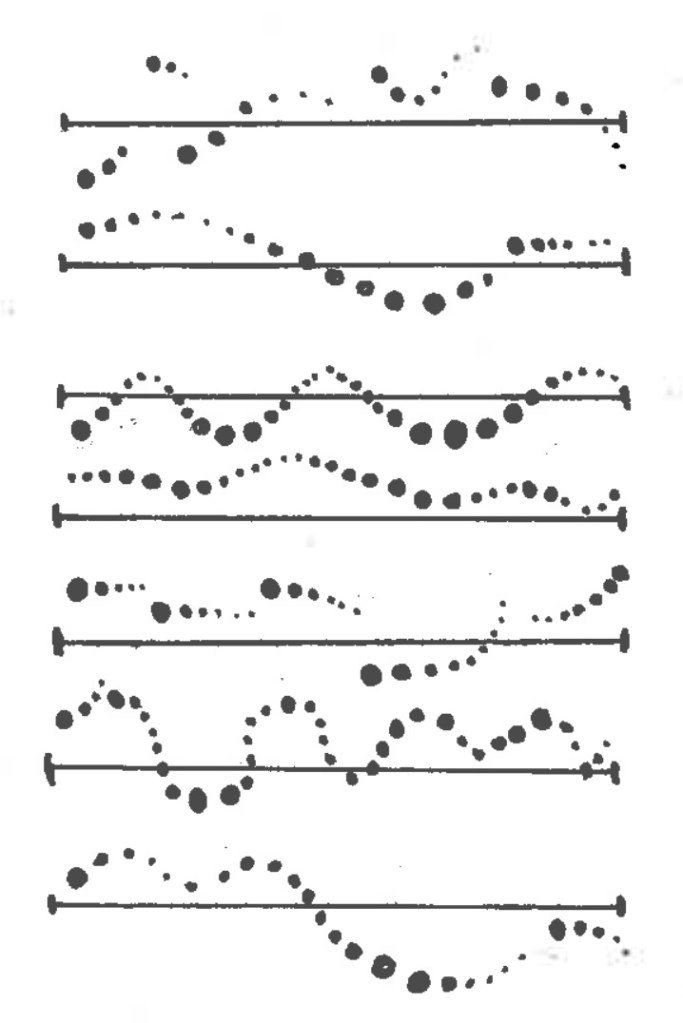
Music Theory for Producers provides a hands-on comprehensive survey of Western art music theory concepts essential for the creation and production of popular electronic music. In addition to exploring the inner workings of beats, melodies, chord progressions, arrangements, and song structures, students will develop fluency in the fundamental skills of electronic music composition, including studio recording, sampling, synthesis, and mixing. Regular stem-sharing assignments and creative problem-sets will culminate toward the composition of a collaborative class EP. Students from any discipline are welcome, and no formal musical training is required.
M
The Art of Liveness: An Introduction to Music Production
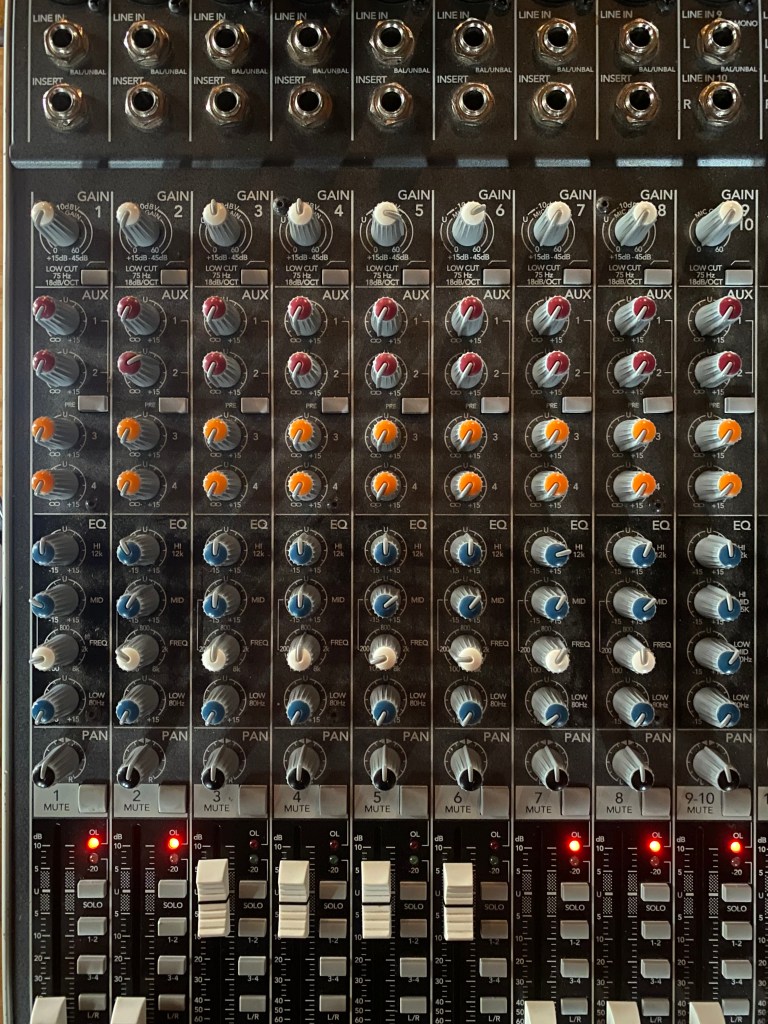
The Art of Liveness: An Introduction to Music Production introduces students to the fundamental techniques of music production. Alongside hands-on comprehensive workshops devoted to the rapid acquisition of practical recording, mixing, and mastering skills, students will critically examine the philosophy of sound (re)producing media, exploring the aesthetics of authenticity, immersion, and presence in musical perception and performance. Through a combination of in-class discussions and tutorials, weekly recreation assignments, and larger creative problem-sets, students will work toward the composition and production of a collaborative class EP. Students from any discipline are welcome, and no formal musical training is required.
 joshua biggs